

MBA Application Countdown: Key Tasks to Complete the First Week of August
Round 1 deadlines are thisclose in August. To make the most of this final sprint to the finish line, let’s talk about some of the things you should be focusing on this week.


This Week’s Not-So-Gentle Reminder
Don’t wait until September to get serious.
If you’re aiming to apply in Round 1, now is the time to refine your essays and actively engage with students and alumni. It takes time to incorporate essay feedback—and authentic, personalized insights don’t come from last-minute outreach. August is your window to strengthen your narrative and show schools you’ve done your homework. Use it wisely!

What You Should Be Doing This Week to Prepare for Round 1
1. Refine Your Essays Through Thoughtful Feedback
As August begins, make time to share your MBA essay drafts with trusted mentors, colleagues, or friends. Their outside perspectives can help you sharpen your narrative, identify gaps, and ensure your message is clear and compelling. Constructive feedback strengthens your essays and gives you confidence that your story resonates—before it reaches the admissions committee.
2. Connect with Students and Alumni to Strengthen Your Essays
Conversations with current students or alumni can offer valuable, firsthand insights into your target MBA programs. Referencing these exchanges in your essays shows authentic interest and helps you convey a deeper understanding of the school’s culture and offerings. These interactions can also clarify how the program fits your goals—adding a personal, informed layer to your narrative.
If you haven’t done so already, review “Nine Tips for Learning More About MBA Programs Through Students and Alumni” by Stratus Senior MBA Admissions Counselor Melisa Prevost for more guidance. In a time crunch? Here is an overview to get you started:
1. Be prepared. Know your MBA goals, and have a clear, concise introduction ready to make the most of others’ time and direct the conversation effectively.
2. Do research. Familiarize yourself with what’s already online to ask deeper, more personal questions—especially about culture, clubs, and student life.
3. Create a list of questions. Plan thoughtful, open-ended questions to guide your conversations and help you compare schools more meaningfully.
4. Attend a tour or a student/admissions chat. Engage with schools multiple times via virtual or in-person events to show your interest and learn from both the school and fellow attendees.
5. Reach out to admissions ambassadors. These volunteers are often well-positioned to provide insights or connect you with students who have the same background or goals.
6. Reach out to students with a common interest. Find students in clubs or organizations who share your hobbies or passions to make a more personal connection.
7. Search via LinkedIn. Use filters to find students or alumni by school and industry on LinkedIn. Send them personalized messages explaining your interest and shared points of connection.
8. Leverage your undergrad alumni network. Treat this like a career exploration. Search for alumni from your undergraduate institution who are current MBA students or recent graduates of your target schools.
9. Send a thank you. A thoughtful note of appreciation reinforces your professionalism and can help maintain the relationship—or prompt a helpful follow-up.
Exclusive video for Substack featuring Stratus Senior MBA Admissions Counselor Donna Bauman. Discover more actionable advice on the Stratus YouTube channel.
MBA Applicant Profile Review
Each week, a Stratus consultant reviews an anonymous MBA applicant’s profile and shares their expert recommendation, drawing on years of admissions experience.

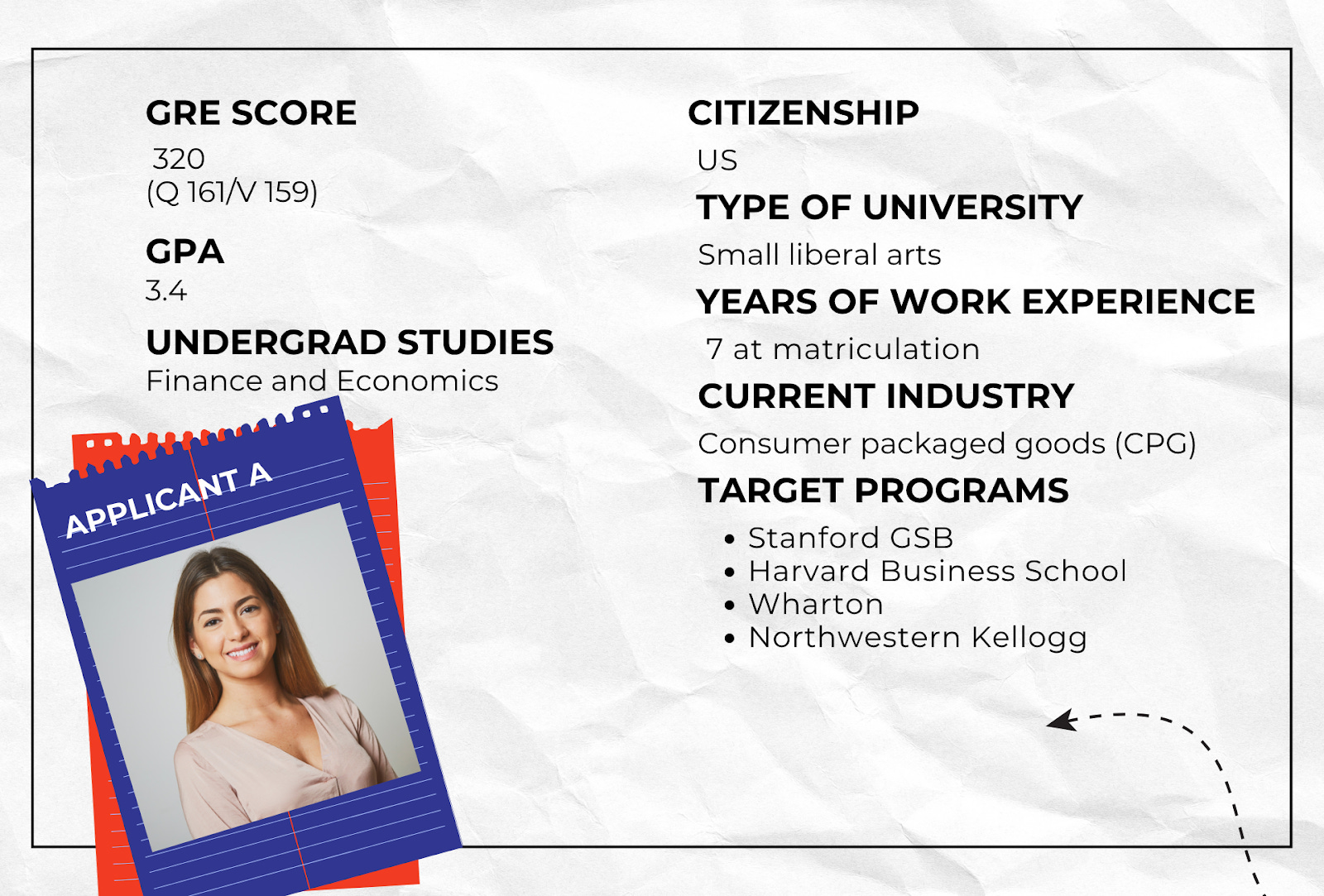
About
First-generation college student who worked throughout college
Involved in multiple extracurriculars since college—helping first-generation, low-income students
Post-MBA goals
Short term: Remain in corporate strategy after earning an MBA
Long term: Rise to a management-level position or possibly found her own CPG company
Jennifer’s Advice
This applicant’s GRE score is lower than average. Therefore, she should consider retaking the test. Her GPA, while also lower than average, is actually quite impressive given that she worked throughout college and had a double major. I would suggest that she mention that fact briefly in the optional essay so the admissions committee gets a full picture of her background.
This candidate has a bit more work experience than the average applicant, so she should consider including a line in the optional essay explaining the “Why now?” aspect of her application. Since she had to pay off her debt and help her parents financially, she would be wise to briefly include that information because it explains part of the timing of her application as well as shows that she assumed a large amount of responsibility.
As far as this applicant’s school list, since all M7 schools are stretches for everyone, I would advise adding some target and even safety schools. I’d recommend exploring Cornell Johnson, Yale SOM, and Indiana Kelley—which are all strong in CPG—as possible options.
This Week’s Action Plan: Refine Essays and Connect with Students/Alumni
Share your essay drafts with mentors, colleagues, or friends to gain constructive feedback that sharpens your message, highlights your strengths, and ensures your story resonates with the admissions committee.
Reach out to current students and alumni to learn about program culture and fit—and then use those insights to enrich your essays with specific, authentic details that demonstrate your genuine interest and alignment.